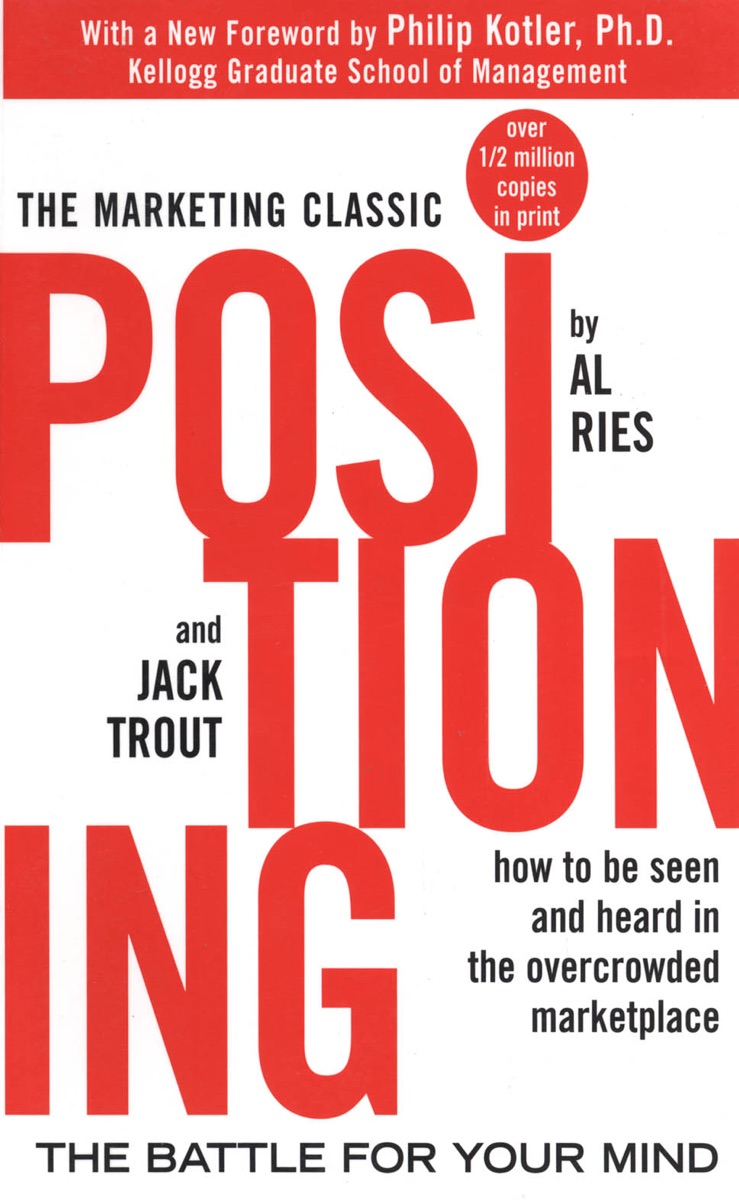
Positioning
Al Ries & Jack Trout
My take
Most companies describe themselves from the inside out: what they built, how it works, and why they believe it matters. Positioning asks a harder question: what can the customer remember? That shift makes positioning a problem of perception and choice. A strong position claims one useful idea, fits the way people already sort the category, and stays consistent long enough to become familiar. I also appreciated the book’s insistence on sacrifice. A position gains meaning from what it excludes. Trying to appeal to everyone usually gives nobody a reason to remember you.
Core insight 1: The position lives in the customer’s mind
A company can control its product, pricing, and message, but it can’t assign itself a place in someone’s memory. Customers interpret every claim through what they already know about the category, the alternatives, and their own needs.
But positioning is not what you do to a product. Positioning is what you do to the mind of the prospect. That is, you position the product in the mind of the prospect.
That makes positioning an act of listening before writing. The useful starting point is the language customers already use and the distinctions they already recognize.
How to practice: Ask five customers how they would describe your product to a friend, what they would compare it with, and when they would choose it. Use their answers to map the position you actually occupy.
Core insight 2: Being first creates a mental shortcut
People have limited room for brands and ideas. The first credible name attached to a category or benefit often becomes the reference point, which gives later competitors a harder communication problem.
The easy way to get into a person’s mind is to be first.
If an existing category is already owned, the answer isn’t to make a louder version of the same claim. A narrower category, audience, use case, or point of view can create a new opening.
How to practice: Write the category your customer would place you in today. If another brand owns its defining idea, identify the smallest truthful category you could lead and state why it matters.
Core insight 3: Consistency lets a position accumulate
A good position becomes valuable through repetition. Frequent changes in language, audience, or promise reset the customer’s learning and make each campaign work from zero.
The most difficult part of positioning is selecting that one specific concept to hang your hat on. Yet you must, if you want to cut through the prospect’s wall of indifference.
Consistency doesn’t mean repeating identical copy forever. It means preserving the same central association while the examples, formats, and creative expressions change around it.
How to practice: Reduce your position to one sentence, then review the last ten public messages from your company. Mark which ones reinforce that sentence and which ones introduce a competing idea.
Core insight 4: Focus depends on sacrifice
Every added audience, feature, or promise can weaken the meaning of the whole. A useful position makes a specific choice about who the product is for, what it does best, and which alternatives it rejects.
The essence of positioning is sacrifice. You must be willing to give up something in order to establish that unique position.
The cost can feel uncomfortable because the excluded opportunities are visible. The benefit appears later, when the right customers can recognize the offer without studying it.
How to practice: List the three ideas your brand is currently trying to own. Choose the one that matters most to your best customers, then remove one secondary claim from your homepage or pitch.
Core insight 5: Difference is interpreted, not manufactured
Small product distinctions can matter, but customers rarely experience them in isolation. Names, context, expectations, and comparisons shape how the same facts are understood.
The mind, as a defense against the volume of today’s communications, screens and rejects much of the information offered it. In general, the mind accepts only that which matches prior knowledge or experience.
This is why a technically superior offer can lose to one with a more recognizable place in the category. Product quality still matters, but people need a simple frame for noticing it.
How to practice: Put your offer beside the two alternatives customers consider most often. Describe the single difference they can understand before using the product, then confirm that it matches their experience afterward.
Positioning is a practical reminder that communication begins with the receiver. Find the idea your audience can recognize, choose it with discipline, and reinforce it until the association becomes easy to recall.
Other reminders
When you try to be everything, you wind up being nothing.
In our overcommunicated society, the paradox is that nothing is more important than communication.
Enjoyed this? You'll like Open Loops.
Every Thursday, I share what I’m learning about growth, work, and the long game. Join 3K+ readers.
You might also like