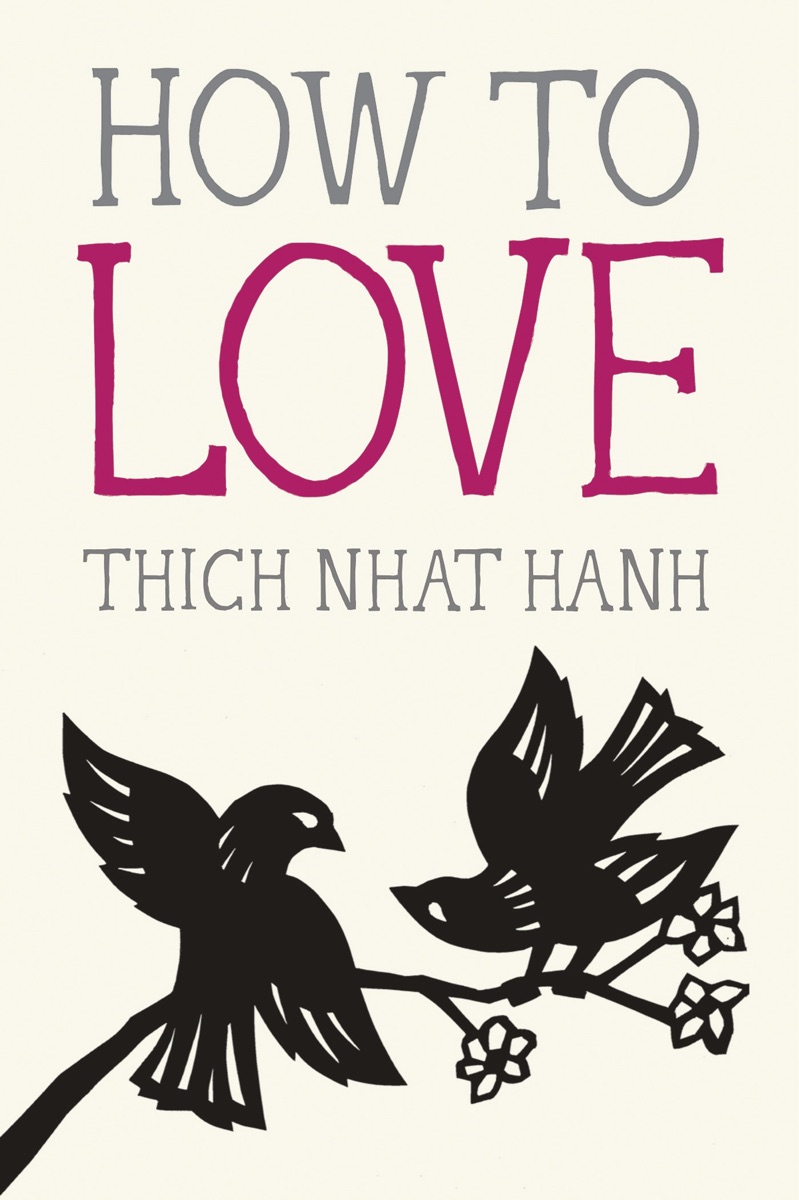
How To Love
Thich Nhat Hanh
My take
I picked this up expecting a book about relationships and got a book about attention instead. Thich Nhat Hanh treats love as something you practice, not something that happens to you, and that one move changes the whole question. Instead of asking whether someone is right for me, it asks whether I’ve done the work to be a home worth coming to. The line I kept returning to is that understanding is the actual substance of love. You can’t love a person you refuse to understand, and you can’t understand anyone if you’ve never sat still with your own suffering first. It’s a small book, almost pocket-sized, and it reads more like a set of reminders than an argument. But the reminders are the kind you keep needing.
Core insight 1: Understanding is love’s other name
We tend to think of love as a strong feeling, but a feeling doesn’t require you to know anything about the person. Understanding does. When you actually grasp what someone is carrying, what they need, what they’re afraid of, love stops being a mood and becomes an act. This is why love deepens with attention and thins with assumption. The people who feel most loved by us are the ones who feel most understood by us.
Understanding someone’s suffering is the best gift you can give another person. Understanding is love’s other name. If you don’t understand, you can’t love.
The more you understand, the more you love; the more you love, the more you understand.
How to practice: Before offering someone advice or affection, ask what they actually need rather than what you’d need in their place. Let the question replace the assumption.
Core insight 2: You can’t offer a home you haven’t built
There’s a strong pull to look for the person who will finally make us feel whole. Thich Nhat Hanh gently points out that this is backwards. If you arrive empty, you’ll reach for the other person to fill you, and no one can carry that weight for long. The love you can offer is the overflow of the peace you’ve already made with yourself. Building that home inside isn’t selfish. It’s the precondition for having anything to give.
When we learn to love and understand ourselves and have true compassion for ourselves, then we can truly love and understand another person.
For true love to be there, you need to feel complete in yourself, not needing something from outside.
How to practice: Notice when you want someone else’s attention to quiet a feeling of emptiness. That’s the moment to turn inward and tend to it yourself first, not to reach outward.
Core insight 3: The pot looking for its lid
He describes the feeling of being a pot searching the world for the right lid, sure that the missing piece is out there somewhere. The trap is that we mistake our own lack for a sign that we need someone else to cover it. When we meet a person who seems to fill the gap, we get addicted to that relief and start believing we can’t live without their attention. But the emptiness came with us, and it leaves with us. Naming it as ours is the first honest move.
Very often we feel like a pot without a lid. We believe that our lid is somewhere in the world and that if we look very hard, we’ll find the right lid to cover our pot.
How to practice: When a relationship feels like it’s rescuing you from yourself, treat that as information, not romance. Ask what you’re hoping this person will save you from feeling.
Core insight 4: Most hurt is displaced pain
Someone treating you badly is almost never a plan to wound you. It’s their own suffering spilling over, and it often has very little to do with you. This doesn’t excuse the behavior, but it changes your response from defense to understanding. Most of what feels like an attack is a wrong perception on both sides, and checking that perception before reacting saves an enormous amount of unnecessary pain.
Other people’s actions are the result of their own pain and not the result of any intention to hurt you.
To love without knowing how to love wounds the person we love.
How to practice: When someone’s words sting, pause before you decide what they meant. Ask whether you’re reacting to what they said or to your interpretation of it.
Core insight 5: Real love includes the weaknesses
It’s easy to love the highlight reel. Loving the whole person, including the parts that frustrate you, is the harder and truer thing. Thich Nhat Hanh frames this not as tolerance but as responsibility: you accept the person as they are and bring your patience to help them grow, rather than demanding they arrive already finished. If you only love the best of someone, you’re loving an idea of them, not them.
True love includes a sense of responsibility and accepting the other person as she is, with all her strengths and weaknesses. If you only like the best things in a person, that is not love.
How to practice: Pick one trait in someone close to you that you keep wishing away. Try meeting it with patience instead of correction and watch what changes.
Core insight 6: A true partner sends you back to yourself
The best relationships don’t complete you, they return you to yourself. A real partner doesn’t become the source of your worth, they point you back toward the beauty and love that were already inside you. That’s a quieter kind of love than the movies sell, but it’s the kind that lasts, because it doesn’t depend on either person staying small enough to need the other.
A true partner or friend is one who encourages you to look deep inside yourself for the beauty and love you’ve been seeking.
How to practice: Measure your closest relationships by whether they make you more yourself or less. The right ones expand you rather than absorb you.
Love, in this book, isn’t a feeling you fall into but a skill you develop, and its foundation is understanding, first of yourself and then of the person in front of you. Build the home inside, and you’ll have something real to offer. Skip that step, and you’ll keep looking for a lid that was never going to fit.
Other reminders
True love is made of four elements: loving kindness, compassion, joy, and equanimity.
The roots of a lasting relationship are mindfulness, deep listening and loving speech, and a strong community to support you.
If you have the impression that you know the other person inside and out, you are wrong. Every person is a world to explore.
Our idea of happiness may be the very thing that’s preventing us from being happy.
When we feed and support our own happiness, we are nourishing our ability to love.
Be a friend to yourself. If you are a true friend to yourself, you can be a true friend to a loved one.
The most precious inheritance that parents can give their children is their own happiness.
If you walk with true awareness of every step, without having a goal to get anywhere, happiness will arise naturally. You don’t need to look for happiness.
Enjoyed this? You'll like Open Loops.
Every Thursday, I share what I’m learning about growth, work, and the long game. Join 3K+ readers.
You might also like