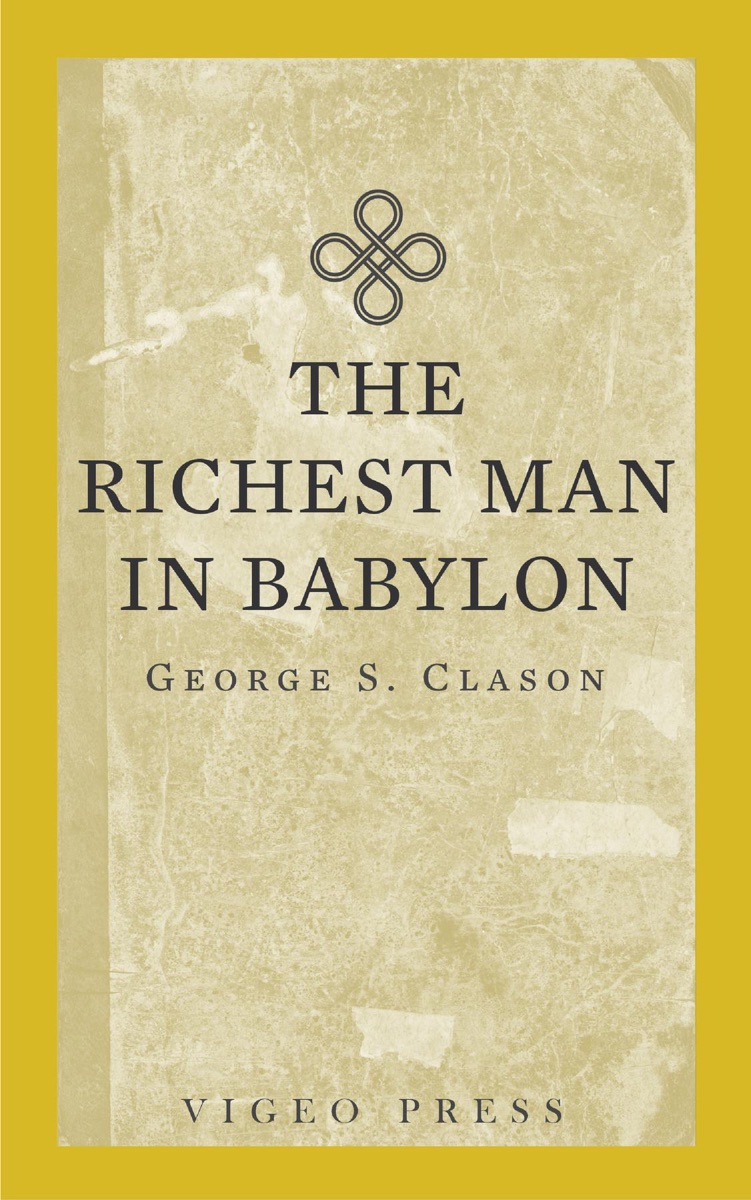
The Richest Man in Babylon
George S. Clason
My take
There is something disarming about receiving financial wisdom from characters in ancient Babylon. The parables strip away the noise of modern finance and reduce wealth to its oldest, simplest mechanics: keep a portion of what you earn, make it work for you, and protect it from your own impatience. I read this book early, long before I had anything worth protecting, and the lesson that stayed with me was not about money at all. It was about the relationship between discipline and freedom. The richest man in Babylon didn’t get rich through cleverness or luck. He got rich because he treated his future self as someone worth paying first. Every other financial book I’ve read since has been, in one way or another, a more complicated version of this. Save before you spend. Invest in what you understand. Seek counsel from people who handle money daily, not from people who have opinions about it. The simplicity is the point. These are not secrets. They’re choices most people know but refuse to make.
Core insight 1: Pay yourself first, or no one else will
This is the book’s foundational principle, and it’s the one most people nod at and then ignore. Before rent, before food, before anything, a portion of what you earn belongs to your future. Not what’s left over after spending. Not a vague intention to save “when things settle down.” A fixed, non-negotiable portion from the first dollar.
A part of all you earn is yours to keep. It should be not less than a tenth no matter how little you earn. It can be as much more as you can afford. Pay yourself first.
Wealth, like a tree, grows from a tiny seed. The first copper you save is the seed from which your tree of wealth shall grow. The sooner you plant that seed the sooner shall the tree grow.
How to practice: Automate a transfer of at least 10% of every paycheck to an account you don’t touch. Do it before you see the money in your spending account. The principle works because it removes the decision. Once it’s automatic, your expenses will adjust to what remains.
Core insight 2: Expenses expand to fill whatever you allow
Clason calls this out plainly: what you consider “necessary” will always grow to match your income unless you draw a line. Get a raise and new expenses appear. A bigger apartment. Better restaurants. Subscriptions you forgot you signed up for. The problem is never the amount you earn. It’s the amount you let slip through.
That what each of us calls our necessary expenses will always grow to equal our incomes unless we protest to the contrary.
Desires must be simple and definite. They defeat their own purpose should they be too many, too confusing, or beyond a man’s training to accomplish.
How to practice: Write down every recurring expense you have. Circle the ones you’d re-subscribe to today if you had to start from zero. Cancel the rest. The gap between what you need and what you’ve let accumulate is usually larger than you expect.
Core insight 3: Make your money work, or work will be all you do
The shift from earning money through labor to earning it through invested capital is the shift the book keeps circling back to. Your savings sitting idle is potential wasted. Every coin you save should be put to work, earning its own return, which then earns further returns. Clason describes this as your money having children, and their children having children.
Every gold piece you save is a slave to work for you. Every copper it earns is its child that also can earn for you.
Gold is reserved for those who know its laws and abide by them.
How to practice: If you have savings sitting in a zero-interest account, move them somewhere they compound. Index funds, high-yield accounts, whatever matches your risk tolerance. The point is not to gamble. The point is to stop letting your money be as idle as you were before you read this book.
Core insight 4: Protect your wealth from your own ignorance
The recurring tragedy in the book is not theft or bad luck. It’s people entrusting their money to ventures they don’t understand, on the advice of people who don’t handle money for a living. The brickmaker who gives investment advice. The friend with a “sure thing.” Clason’s rule is clear: invest only in what you understand, and seek counsel only from those whose daily work involves managing wealth.
The first sound principle of investment is security for thy principal. Is it wise to be intrigued by larger earnings when thy principal may be lost?
Advice is one thing that is freely given away, but watch that you only take what is worth having.
How to practice: Before making any investment, answer two questions: Do I understand how this works well enough to explain it to someone else? And is the person recommending it someone who manages money professionally, not just someone with an opinion? If either answer is no, wait.
Core insight 5: Opportunity rewards the prepared, not the hesitant
One of the book’s parables tells of a man who hesitates when a good investment opportunity arises because he wants to buy new robes instead. By the time he decides, the opportunity is gone. The lesson is not about impulsiveness. It’s about the cost of delay when you’ve already done the work of preparation.
Opportunity is a haughty goddess who wastes no time with those who are unprepared.
Good luck can be enticed by accepting opportunity.
In those things toward which we exerted our best endeavors we succeeded.
How to practice: Build the financial foundation (savings, knowledge, counsel) so that when the right opportunity appears, you can act without panic or hesitation. The people who “get lucky” are almost always the ones who were ready before luck arrived.
Core insight 6: Work is a friend, not a sentence
There’s a quiet passage in the book where a character’s father tells him to treat work as a friend. To take pride in it not because someone is watching but because well-done work changes the person who does it. This is the deeper layer beneath all the financial advice: the discipline that builds wealth is the same discipline that builds character. They’re not separate skills.
Work, well-done, does good to the man who does it. It makes him a better man.
Where the determination is, the way can be found.
How to practice: Pick the task you’ve been treating as a chore and approach it tomorrow as craft. Not because it deserves the effort, but because you do. The shift in how you relate to the work changes the quality of both the output and the experience.
The Richest Man in Babylon is the shortest and most actionable book on personal finance ever written. It doesn’t try to be clever. It tells you the rules, wraps them in stories simple enough to remember, and trusts you to follow them. The rules have not changed in three thousand years. They probably won’t change in the next three thousand. The only variable is whether you decide to follow them before or after you’ve learned the hard way.
Other reminders
As for time, all men have it in abundance.
Our acts can be no wiser than our thoughts. Our thinking can be no wiser than our understanding.
Will power is but the unflinching purpose to carry the task you set for yourself to fulfillment.
Better a little caution than a great regret.
If a man has within him the soul of a free man, will he not become respected and honored in his own city in spite of his misfortune?
Learning was of two kinds: the one being the things we learned and knew, and the other being the training that taught us how to find out what we did not know.
Enjoyed this? You'll like Open Loops.
Every Thursday, I share what I’m learning about growth, work, and the long game. Join 3K+ readers.
You might also like