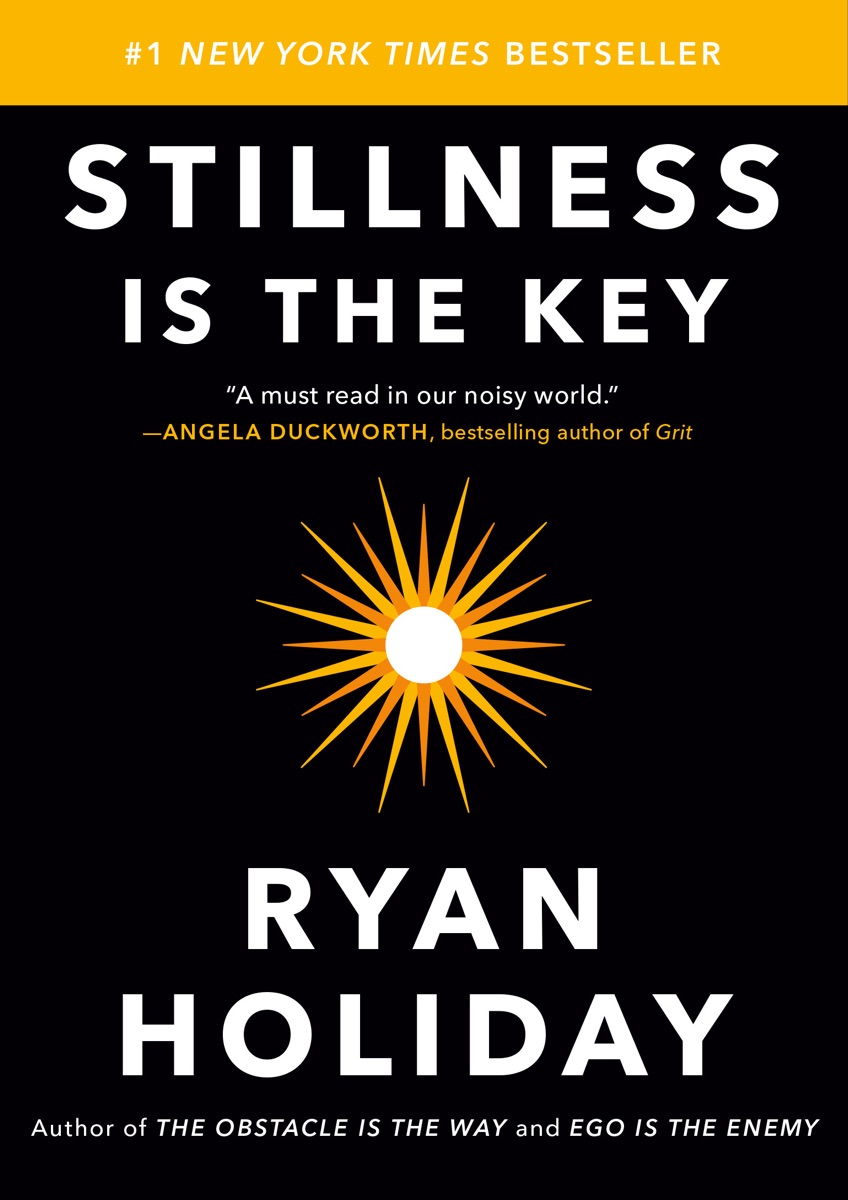
Stillness Is the Key
Ryan Holiday
My take
The passage I saved from this book is about the cost of saying yes. Every request asks for some part of a life, even when it arrives disguised as a quick call or a good opportunity. I like how concrete that makes the idea of stillness. A mind has a much harder time settling when the calendar keeps making promises the person living through it doesn’t want to keep.
Holiday looks at stillness through the mind, spirit, and body. That gives me a useful way to read the book: attention, emotional life, and physical habits all deserve a place in the conversation. A protected morning can help with concentration. It can’t resolve every resentment, decide what enough means, or compensate for never resting.
My caution with this kind of book is how easily calm becomes another performance target. Better focus, better output, a more impressive version of the same crowded life. The parts I want to keep are the ones that make room for an ordinary day: a decision made without panic, a conversation that gets my attention, time spent doing something without turning it into a score. I want stillness to change what I give my life to, as well as how I handle what I’ve chosen.
Core insight 1: Give the first reaction time to settle
A message can occupy far more space in a day than the few seconds it takes to read. The mind supplies a motive, rehearses an argument, and starts preparing a response before the facts have caught up. Holiday’s emphasis on deliberation gives me a useful place to intervene. I can take the feeling seriously while giving the interpretation some time. That pause leaves room to ask a question, notice an assumption, or decide that a reply can wait.
So much of the distress we feel comes from reacting instinctually instead of acting with conscientious deliberation.
How to practice: Before answering a message that raises your pulse, write down what it actually says and what you’re assuming it means. If there’s no immediate decision to make, leave the reply for a short walk or the next morning. Return with one question you’d like answered before you commit to your interpretation.
Core insight 2: A journal gives an ordinary day somewhere to go
I appreciate the book’s invitation to put thoughts on paper. A private page gives a worry somewhere to exist without requiring another person to carry it immediately. Holiday’s later essay about his one-line journal adds another reason to keep the practice small: memory misses so much. An entry can preserve a conversation, an irritation, or a good afternoon that would otherwise disappear. Over time, those details can reveal what deserves more attention and what keeps asking for a change.
It’s weird how much you don’t remember, even of your own life.
How to practice: Write a few lines before bed: something that happened, something that bothered you, and something you’d like to remember. Keep the entry small enough to repeat on a tired evening. At the end of the month, look for one recurring concern and one ordinary pleasure you’d like to make room for again.
Core insight 3: Put the cost of a yes on the calendar
This is the thread I care about most in the passage I saved. An opportunity can be attractive on its own and still ask for hours I’ve already promised to something else. The cost includes preparation, travel, the interruption, and whatever follows me home afterward. Holiday develops this in his essay on saying no. I find the calendar a useful place to test the idea because it makes the trade visible. The work, relationships, and rest I value need actual room in a week.
It feels like you’re free because you’re choosing, but if the answer is always yes, that’s not much of a choice.
How to practice: Before accepting a new commitment, put its full cost into the week where it’ll happen. Include preparation and travel. Name what will lose that time, then decide whether you still want the exchange. If you decline, give a kind, direct answer without leaving a maybe you don’t mean.
Core insight 4: Define enough in the shape of a day
Contentment gets difficult when every milestone creates a larger target. I find the book’s attention to desire useful here, especially alongside Holiday’s later writing about the pressure to keep expanding a successful business. A good ordinary day is a more concrete measure than being successful enough to relax someday. It has working hours, people in it, and an evening that feels worth having. That makes it possible to examine whether the next ambition would support that life or consume more of it.
My ideal day doesn’t require me to be rich or powerful or important.
How to practice: Describe a satisfying Tuesday, including work, money needs, relationships, and time alone. Then compare one current goal with that description. Write down what the goal would improve and what it would require you to give up. Use both sides when you decide how far to pursue it.
Core insight 5: Leave something in your life without a score
The body matters throughout Holiday’s account of stillness. Walking, swimming, making things, and other absorbing activities can give attention somewhere to rest. In his interview about the book, he talks about the risk of bringing more competition into a hobby. I like that distinction because an activity can be demanding and still offer relief. The experience changes when every session needs a result, a public record, or evidence of improvement. There’s room for something I enjoy doing even when it produces nothing worth reporting.
But the point is, I’m not trying to win at my hobby.
How to practice: Give one activity this week permission to stay unmeasured. Walk without tracking the distance, cook without photographing the result, or play music without recording it. Choose something that holds your attention, then let the time spent doing it be enough reason to continue.
What I want to keep from this book is a habit of checking what a full life actually contains. A little room before reacting, a private page, a considered no, and an unmeasured hour all give that question somewhere practical to begin.
Enjoyed this? You'll like Open Loops.
Every Thursday, I share what I’m learning about growth, work, and the long game. Join 3K+ readers.
You might also like